
Texas County Parole Versus Probation
Parole and probation both allow a person to live outside a jail or prison, but they arise in different ways. Parole is a conditional release from imprisonment. The person serves the remaining part of the term under rules set through Oklahoma's parole and corrections process. Probation is ordered by a court. It may follow a suspended sentence, a deferred sentence, or another judgment that places the person in the community instead of requiring the full term in confinement. A released Texas County prisoner may also have post-imprisonment supervision, which is a court-ordered period after incarceration.
The Oklahoma Pardon and Parole Board handles parole proceedings and publishes outcomes. The Oklahoma Department of Corrections Probation and Parole Services performs field supervision. Neither source is a complete Texas County jail-release list. The court judgment identifies the legal basis, ODOC shows state custody or supervision, and the Texas County Sheriff's jail register records a county discharge or transfer.
| Feature | Parole | Probation |
|---|---|---|
| How it begins | Conditional release after imprisonment and the required parole process | Court sentence or order placing a person under community rules |
| Main decision record | Parole Board docket, result, and ODOC release record | Texas County District Court judgment and later docket entries |
| Field supervision | ODOC Probation and Parole Services | ODOC when assigned, subject to the judgment |
| Proof confinement ended | ODOC status and Certificate of Release | Sheriff discharge entry or court and ODOC records, depending on custody |
- Discharge
- The formal end of the controlling custody or supervision obligation.
- Suspended sentence
- A conviction for which all or part of confinement is held back, often with conditions.
- Deferred sentence
- A sentence delayed under court conditions, with a possible later dismissal and expungement when the law permits.
- Absconder
- A person alleged to have stopped required contact or left supervision without authorization.
Check Texas County Post-Release Supervision
Verification works best as a record chain. A name on a Board result does not prove the person walked out of prison, and a community-supervision label does not explain the original court order. Start with an ODOC number when available. It is more reliable than a common name. Compare the county, case, sentence, and status before treating a result as the correct person.
- Search the ODOC Offender Search by ODOC number or the most complete name. Preserve the exact custody or community status shown.
- Search the OSCN court docket with Texas County selected. Read the judgment and later entries for parole, probation, a suspended term, revocation, or termination.
- When parole is involved, check the Board's monthly dockets and results. Match the DOC number, county, and case.
- Confirm actual release with ODOC. A Certificate of Release can connect the custody exit to reporting instructions.
- Call the Guymon field office for public routing information when the record shows supervision assigned in Texas County.
Protected check-in times, residence details, or an individual case plan may not be public. Ask for verification that an office is responsible, not private supervision details. The broader Texas County released-inmate search and record path covers county discharge entries when no ODOC commitment occurred.
Note: A person can be released from confinement and still remain subject to court or ODOC authority.
Texas County Guymon Supervision Office
The live ODOC directory assigns Texas County to the Guymon Probation and Parole office. It also serves Beaver and Cimarron counties. That regional setup matters because a person may live outside Texas County or have a case from another Panhandle county while reporting through Guymon. An older ODOC attachment listed a different local address and telephone number. Use the current web directory and call before traveling.
ODOC Guymon Probation and Parole
411 Quinn
Guymon, OK 73942
Phone: 580-754-3727
Coverage: Beaver, Cimarron, and Texas counties
Public walk-in hours: Not published; call first
The official office table is also the source for any later reassignment. A field office is not a jail, a release feed, or a place to seek a county booking photo. Its role here is to confirm supervision routing after the court and ODOC records show that community supervision exists.
The official directory screen shows the exact Guymon assignment. Review the ODOC supervision-office source before relying on a saved address.
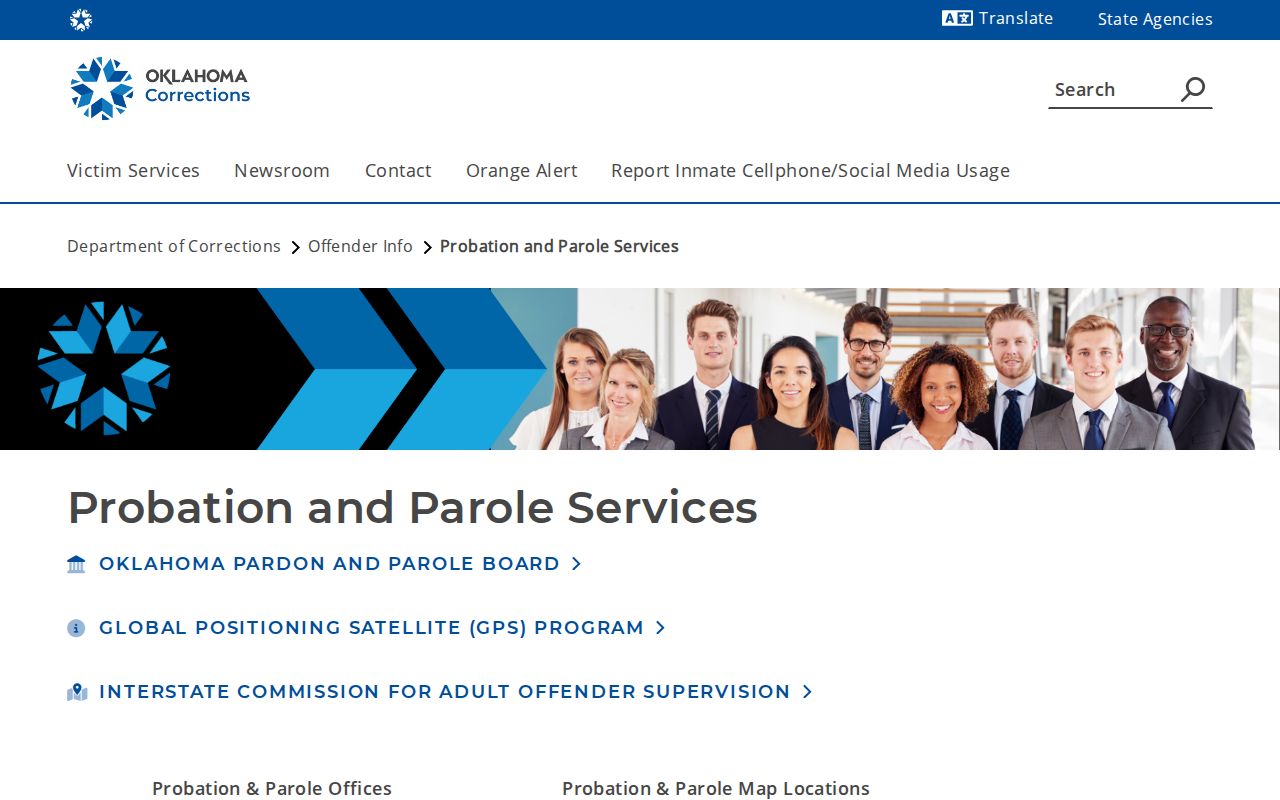
The image confirms Texas County's placement in the Guymon service row while leaving individual reporting rules to the assigned officer.
Texas County Parole Hearing Records
The Board's meeting page publishes annual dates, current meeting details, agendas, minutes, remote or location information, and archives. The archive reflects generally monthly proceedings. Dates can still change. Check the live page for a cancellation, special setting, or revised location rather than assuming a fixed weekday.
The separate docket search and year-and-month result pages let a reader follow one DOC number. Result wording must be kept exact. “Denied” differs from “stricken.” “Passed to Stage II” is not release. “Favorably recommended” may require further action, and “parole to a consecutive sentence” means the person remains confined under another term. A program condition can also delay street release.
A typical month on the official hub displays distinct links for a docket and its results. The Board dockets and results source should always be checked with ODOC afterward.
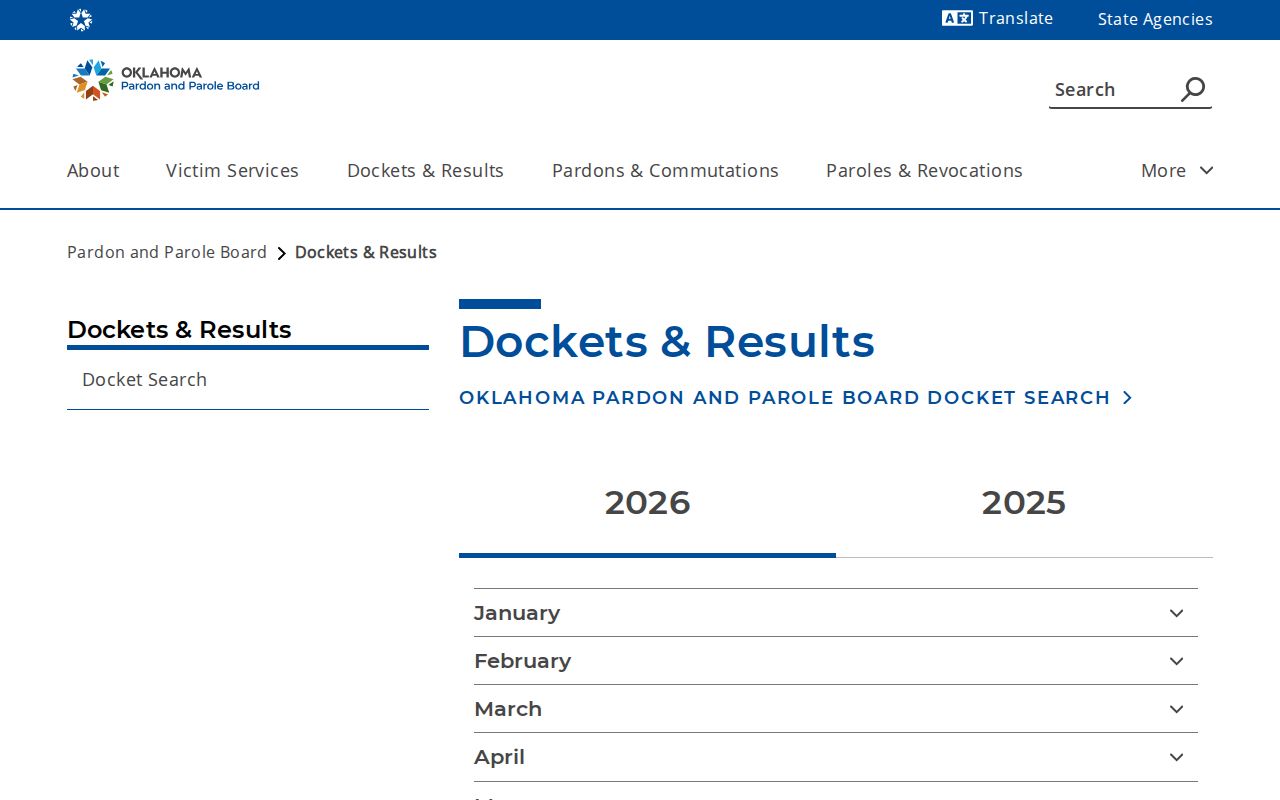
This view illustrates why the scheduled docket and the recorded outcome are separate records, neither of which alone proves physical discharge.
Texas County Parole Eligibility Rules
Oklahoma parole eligibility is case-specific. Title 57 § 332.7 uses the offense date, offense type, mandatory term, and other factors. Its framework includes older matrix rules for crimes before July 1998, a general one-third rule for qualifying crimes from July 1998 through October 2018, and a general one-fourth rule for qualifying crimes from November 2018 forward. Title 21 § 13.1 adds an 85-percent minimum-service limit for listed crimes. That limit is not a statewide promise that every prisoner leaves after serving 85 percent.
OAC 515:25-3-1 also identifies cases that do not receive a standard parole-consideration date, including some short-to-discharge receptions, delayed or indeterminate sentencing situations, specified revocation custody, sentences served outside ODOC, death, life without parole, and certain repatriation returns. Mandatory imprisonment comes first. Nonviolent parole usually follows a one-stage Board process, while violent cases use stages and may require gubernatorial action. Death and life-without-parole sentences are not eligible.
Texas County Absconder Record Paths
Oklahoma divides absconder responsibility by sentence type. ODOC administers parole-warrant processes. Its current sentence-administration policy says a probation absconder remains the responsibility of the convicting county, and the assigned officer notifies that county's district attorney. This makes a Texas County probation question different from a parole warrant question.
Check the ODOC fugitive search for an official statewide lead. Then read the Texas County District Court docket and confirm any warrant through the issuing court, district attorney, sheriff, or ODOC. An absconder label alleges noncompliance. It is not a new conviction. A commercial list may lag after a warrant is recalled, so do not repeat it as current authority.
For probation, the court record can show an application to revoke, a warrant entry, a hearing, or a later disposition. For parole, ODOC and the Board supply the stronger state records. VINELink focuses on custody changes and does not replace either supervision path.
When Texas County Supervision Ends
Release from a jail or prison and discharge from supervision are separate events. A parolee can complete the incarceration stage while still serving the balance under conditions. A person on a suspended or deferred sentence may remain under court and ODOC requirements until the court or agency records termination. The final proof depends on the sentence: an ODOC discharge status, a supervision termination record, or a Texas County court order.
Read each status in its own date context. The prison-release date, probation start, parole start, revocation, and final discharge can all differ. If a public offender record looks inactive, check the case docket for a later order. If a court entry says supervision ended, verify whether another case or consecutive sentence remains. A missing public result may also reflect a lawful sealing or expungement process rather than an error.
A Certificate of Release can also explain where reporting begins after ODOC confinement. Current sentence-administration policy directs the institution to give written reporting instructions when parole, unrevoked probation, a suspended split-sentence portion, or court-ordered post-imprisonment supervision follows. The records officer routes the certificate, pre-release plan, and related record material to the proper region. That chain helps distinguish release from prison, arrival under supervision, and final discharge.
When the public record does not show an end date, request a narrow existing item from ODOC or the court. Use the full name, DOC or case number, and the specific termination or discharge record sought. Do not ask the Guymon office to interpret the sentence or disclose a private case plan.
Note: The Guymon office can route a supervision inquiry, but the controlling agency or court record supplies the formal end date.